Is This Heartfelt SVG Graphic Ready for Real Client Work?
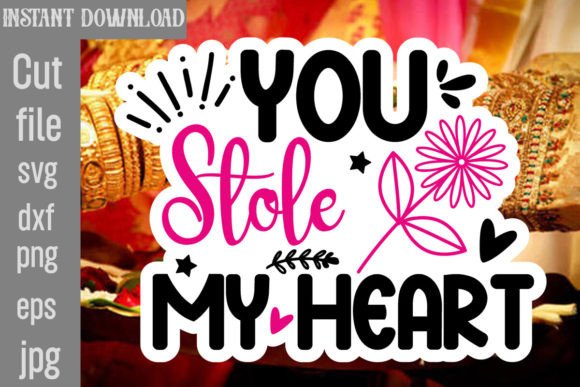
Before I open a design asset for a client project, I always ask a simple question: does this piece bring more than just decoration? Does it elevate the concept, communicate a mood, and integrate seamlessly into a professional workflow? Today, I’m reviewing You Stole My Heart SVG Cut File, a digital asset listed within the crafts and graphics category, to see if it meets those standards.
First Impressions: Soft Romance and Handmade Appeal
Immediately, this asset establishes a clear mood. The typography—likely a mix of a playful script and a clean sans-serif—combined with the central heart illustration speaks to soft romance, affection, and a handmade, personal touch. It feels warm and approachable, not corporate or overly slick. This tells me it’s a natural fit for projects targeting audiences who value authenticity and emotional connection.
For a client project, this could beautifully support a boutique brand launching a Valentine’s collection, a small business specializing in personalized gifts, a local event like a community wedding fair, or an Etsy shop’s seasonal marketing visuals. The style leans towards modern handmade rather than vintage distressed, offering a clean yet heartfelt aesthetic.
Performance in Real Design Situations
Let’s move from theory to practice. How would You Stole My Heart SVG Cut File perform when placed into actual deliverables?
Where It Shines as a Design Asset
For large layout areas and hero graphics, this piece has the detail and visual weight to hold attention. On a poster for a pop-up shop, a website banner for a product launch, or as the central art on a tote bag or mug, it would work well. The included vector formats (SVG, EPS) mean scaling up for large prints or merchandise is flawless.
As a decorative accent within a broader themed collection, it’s excellent. Imagine a series of social media graphics, product labels, and packaging for a “love-themed” line; this asset could be the unifying visual thread. The transparent PNG at 300 DPI makes it a breeze to drop into digital mockups for Instagram posts, Pinterest pins, or Canva templates.
Its suitability for Cricut projects and sticker design is explicit, given the file bundle. For a client selling physical crafts—vinyl decals, handmade cards, or apparel via print-on-demand—this is a ready-to-cut graphic. It functions not just as a graphic design asset but as a direct production file.
Caution Required: Where to Use Carefully
In small sizes, particularly within crowded layouts like busy product tags or detailed flyers, the intricate elements of the heart and script might lose clarity and become visual noise. It should not be used as a secondary logo in a tiny footer.
On complex backgrounds or in low-contrast designs, the asset’s readability could suffer. It needs a clear space to breathe. For projects demanding very clean visual hierarchy or a minimalist, corporate brand identity, this graphic’s decorative nature might clash. It’s emotionally appealing, not strictly informational.
The Impact on Professional Design Outcomes
Using an asset like this isn’t just about adding an image; it’s about shaping the project’s entire impression.
Readability and Hierarchy: Because this is likely a combination of elements, I’d test placing it with other text. Does “You Stole My Heart” dominate too much, or does it integrate? In a packaging design, it might serve as a primary decorative element, with product details set in a simpler font nearby.
Brand Consistency and Visual Trust: For a handmade business or a creative marketplace seller, this asset reinforces a brand that is personal and craft-oriented. It builds emotional appeal and audience engagement. For a more generic corporate brand, it could feel off-tone and reduce perceived professionalism.
Overall Project Polish: The key here is the quality of the files. A well-made vector file and a high-res transparent PNG allow for crisp application across print and digital, making the final client deliverable look technically proficient and polished.
Practical Designer Notes Before Client Use
Before I would commit this to a real client project, I run a few standard checks. These steps prevent embarrassing revisions and ensure commercial viability.
First, I test it in black and white and check contrast on both light and dark backgrounds. Does the design hold its form without color? This is crucial for applications like laser engraving or single-color merchandise.
I preview it at small and large sizes—not just on screen, but on real mockups. I place the PNG on a t-shirt mockup, a mug template, and a website header graphic to see how it interacts with other elements.
If print is involved, I test print quality at a standard size. The 300 DPI PNG should be sufficient, but the vector EPS is my safety net for any scaling adjustments.
A critical step is to review the file formats and their editability. The SVG and EPS files mean I, or the client, can potentially ungroup elements, adjust colors, or integrate parts into a larger logo design if the commercial license permits. I inspect the PNG’s transparency to ensure no unwanted white edges remain.
I also consider typographic pairing. How does this asset compare when placed near a sharp serif font, a neutral sans-serif, or other display fonts? It should complement, not fight.
Finally, and most importantly, I confirm the commercial licensing explicitly. For any business project—brand identity, marketing visuals, printable products for sale—I must verify that using this graphic design asset for a client’s commercial ends is permitted. This is the foundation of ethical and legal professional use.
The Final Judgment for Crafts and Graphics Projects
You Stole My Heart SVG Cut File is a competent, mood-specific asset. It won’t be a universal tool, but within its niche—projects requiring warmth, personal connection, and a crafted aesthetic—it is highly effective. The provided file bundle (SVG for Cricut, DXF for Silhouette, EPS vector, and high-res PNG) covers most professional and production scenarios for digital sellers and crafters.
For a designer working with a small business in the gift, event, or handmade sector, this could be a valuable piece to accelerate a visual concept. It provides a ready-made heart of the design, allowing focus on layout, messaging, and brand application. Used thoughtfully, with attention to scale, contrast, and licensing, it can help a final result feel cohesive, emotionally resonant, and, importantly, professionally executed.