Retro Valentine’s Day: A Designer’s Hands-On Review
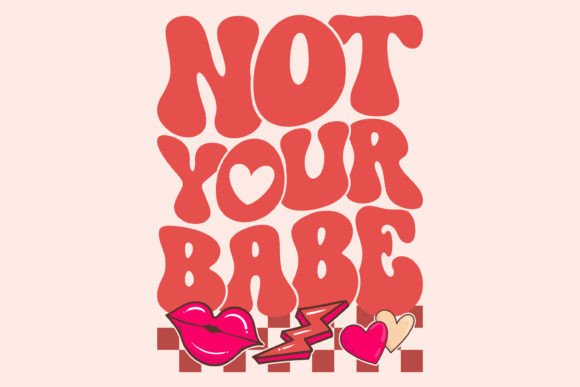
When you find a digital design promising a ‘retro Valentine’s Day’ vibe, your first question as an embroidery professional isn’t about the file specs—it’s about the real-life stitchability. How will this translate from screen to fabric? Let’s walk through a practical assessment of the ‘Retro Valentine’s Day Svg, Not Your Babe’ design.
The First Impression: Mood and Application
My immediate reaction to the ‘Not Your Babe’ phrase paired with a retro aesthetic is that it’s confidently playful. It feels less like a traditional romantic sentiment and more like a statement piece—perfect for a client who wants something unique for Valentine’s Day or beyond. The layout likely leans into bold typography and classic graphic elements.
For an embroidery designer, this suggests it’s a candidate for projects where the message itself is the star. Think of a custom embroidered sweatshirt or a sturdy tote bag. I can immediately picture it on a heather gray hoodie, where the retro lettering pops in a contrasting thread color. The mood is fun, slightly cheeky, and very giftable—ideal for a boutique’s holiday collection or a personalized gift for a friend who appreciates a vintage twist.
Where This Design Thrives in Real Projects
Given the design’s probable reliance on clear lettering and graphic shapes, it would perform well on stable, medium-weight fabrics. Here’s where I’d confidently use it:
- Apparel with a stable base: Cotton sweatshirts, canvas tote bags, denim jackets, and structured aprons. The fabric won’t stretch or distort the clean lines.
- Home goods and decor: Pillow covers, kitchen towels, or simple blanket accents. These items offer a flat, easy-to-hoop surface.
- Embroidered patches: This design could be fantastic as a standalone patch. The ‘retro’ theme and clear statement make it a sellable item for craft fairs or Etsy shops.
- Gift-focused merchandise: For small business owners creating holiday bundles, this design on a tea towel or cap becomes a ready-made, conversation-starting product.
The key here is visual clarity. On the right product, the embroidered version will look crisp, professional, and add genuine value to the finished item.
Caution Zones: Where to Proceed Carefully
Every design has its limits, and knowing them saves time and thread. For ‘Retro Valentine’s Day Svg, Not Your Babe’, I’d be cautious on:
- Very small hoop sizes: If the design has intricate details or small lettering, scaling it down for a baby item or hat logo might lose the definition.
- Highly textured or stretchy fabrics: A slub knit or a thin, stretchy t-shirt could make satin stitches on lettering look wobbly. A good stabilizer is non-negotiable here.
- Dark fabrics without careful planning: If the design uses fine lines, you need to ensure your thread color choice provides enough contrast. A light thread on dark fabric can still look great, but stitch density must be sufficient to prevent the background from showing through.
- Curved surfaces like caps: Embroidering on a cap requires adaptation. The design’s layout must be evaluated for distortion on a curved seam.
This isn’t to say the design can’t work in these scenarios—it just means you need to test first on a scrap of the actual fabric you plan to use.
The Professional Impact: From Stitch to Sale
Using a well-executed design like this affects more than just the product; it impacts your craft business. A clean, charming embroidery job using this retro Valentine theme enhances customer trust. It shows attention to detail. For an Etsy seller, it creates a cohesive, appealing listing photo. For a personalized gift, it feels thoughtfully made, not mass-produced.
The ‘Not Your Babe’ message also has a modern, brand-friendly angle. It could align perfectly with a small shop’s identity that leans into empowerment or nostalgia. This isn’t just a holiday graphic; it’s a versatile design asset that can be used for commercial embroidery projects year-round for the right audience.
Essential Designer Notes Before You Hoop
Before you commit this to a client’s order or your own shop inventory, run through this quick checklist:
- Always test the embroidery file on scrap fabric. Check for any overly dense fill areas that might pucker or tiny details that might not stitch cleanly.
- Review thread color contrast. Create simple black and white mockups on your software to see how it reads as pure shape.
- Confirm the hoop size needed. Does the design require a larger hoop for best detail, or can it adapt to a smaller one?
- Use the proper stabilizer for your chosen fabric. This is critical for maintaining the design’s integrity.
- Most importantly, confirm the licensing for this graphic. The product is listed under Crafts and Graphics. Before selling finished embroidered items or using it in commercial projects, verify the license terms directly with the seller. This protects your business.
Remember, the provided file is a high-quality PNG, which is great for visualization and mockups. For machine embroidery, you will need to convert or obtain a suitable embroidery file format (like .dst or .pes) and verify its stitch count and machine compatibility separately.
A Real Scenario: Embroidering a Valentine Tote
Let’s picture a real case. I’m preparing a limited run of Valentine’s Day tote bags for my small shop. I choose a natural cotton canvas bag. The ‘Retro Valentine’s Day Svg, Not Your Babe’ design, stitched in a rich red and cream thread combo, becomes the focal point. The retro styling gives it a timeless, handmade quality that stands out from typical holiday merch. It’s not overly sentimental, so it appeals to a broader customer. After stitching, the design feels substantial and well-made—it increases the product’s perceived value. A customer buying it as a gift feels they’re giving something unique. That’s the practical power of choosing the right design for your embroidery project.
In essence, this design offers a strong stylistic foundation. Its success in your work hinges on pairing it with the right fabric, thorough testing, and a clear understanding of its commercial use rights. Approach it with a professional’s mindset, and it can become a versatile, appealing asset in your embroidery repertoire.